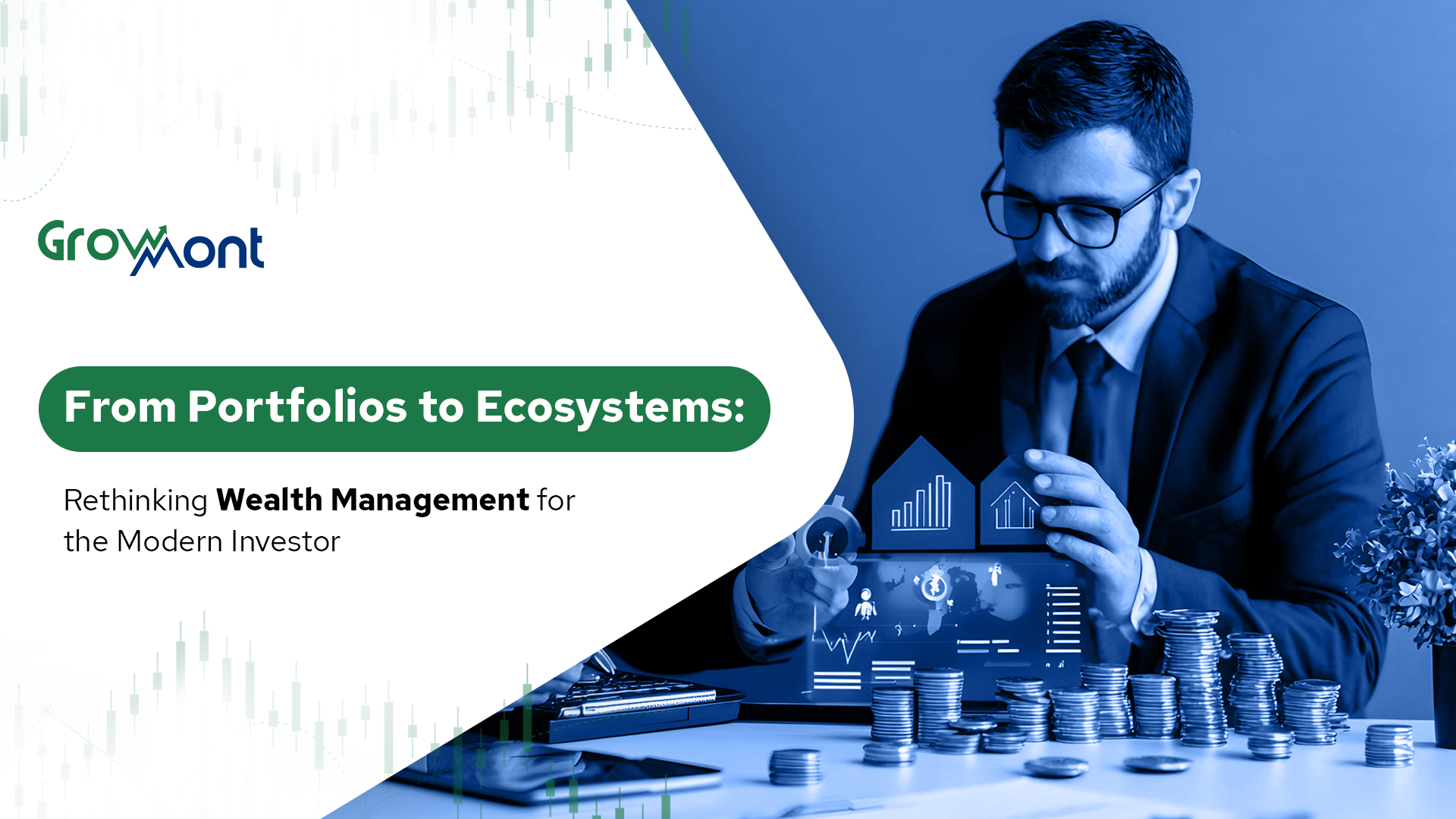
In today’s world, a good portfolio is not enough.
For high-net-worth individuals, family offices, and institutions, wealth today doesn’t live neatly inside a spreadsheet. It spans across borders, asset classes, generations, regulatory regimes, currencies, aspirations, and obligations. And yet, most financial strategies are still built around portfolios—static collections of assets meant to chase returns.
At Growmont, we believe the future belongs to a different model: wealth ecosystems.
Why Portfolios Alone Are Inadequate
A traditional portfolio answers the question: Where should I invest my money?
A wealth ecosystem answers: How does every part of my financial life interact, support, and protect every other part?
The old portfolio-centric approach assumes:
- Capital is the only asset to manage
- Risk is purely market-based
- Returns are the only benchmark of success
But for serious wealth, none of these assumptions hold.
- Capital must be integrated with tax, cash flow, legal structures, and family governance.
- Risk includes liquidity, asset concentration, regulatory shifts, succession complexity, and behavioural dynamics.
- Success is measured not just in returns, but in continuity, resilience, and optionality across generations.
What a Wealth Ecosystem Looks Like
A true wealth ecosystem is dynamic, multi-layered, and purpose-driven. It seamlessly integrates:
- Investments: Public, private, alternatives, global diversification
- Liquidity Structures: Designed to ensure access across market cycles—through short-term buffers, tactical reserves, and contingency planning.
- Legal and Regulatory Frameworks: Trusts, holding companies, cross-border compliance mechanisms to protect and govern assets.
- Succession Planning: Provides clear frameworks for wealth transfer and operational control
- Philanthropic Strategy: Legacy giving integrated into the core financial architecture
- Behavioural Risk Management: Systems to pre-empt emotional decision-making under stress
Each element strengthens the others, creating a system that evolves with the family, not against it.
The Pitfalls of Fragmented Wealth Management
Without an ecosystem lens, even large portfolios often suffer from:
- Asset duplication and over-concentration
- Tax inefficiencies eroding long-term gains
- Misaligned cash flow and liability structures
- Governance gaps leading to family disputes
- Inability to respond cohesively to market or regulatory shocks
Ultimately, it’s rarely the absence of wealth that creates long-term challenges.
It’s the absence of design.
Building the Future: Why Growmont Believes in Ecosystems
In our view, wealth isn’t a collection of good investments. It’s a living system—deliberate, engineered, and constantly evolving. When we engage with clients, our conversations go far beyond return targets. We ask about
- liquidity needs and timelines,
- succession goals,
- philanthropic intent and impact
- family structure
- global exposure and compliance
and how all of these will interact under different economic, legal and generational scenarios
Because true resilience doesn’t come from having more assets. It’s a set of interlocking systems that support life, ambition, and legacy across time.
And that’s what we quietly build at Growmont.